
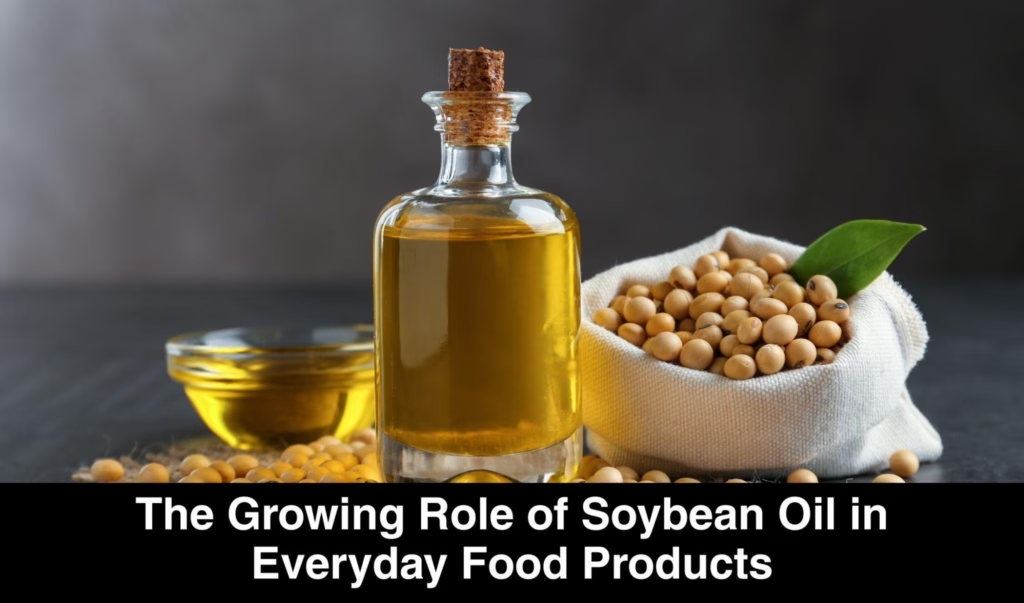
Check the ingredients on any prepackaged food products, including snacks, meals, dressings, and bakery items, and it is likely that soybean oil will be found within the list. While rarely discussed to the same degree as proteins or vitamins and minerals, soybean oil has come to play an integral part of the food industry due to its many favorable qualities.
In fact, soybean oil provides an array of attributes that are desirable to food producers and consumers alike, such as low cost, abundance, flexibility, and more. As global food production continues to increase, soybean oil becomes an even more vital element, as it helps food manufacturers to mass-produce foods effectively.
Due to soybean oil’s rising prominence in the global food industry, the Soybean Oil Market has received increased attention, in addition to the development of the Soybean Oil Price Trend, as both factors have implications for production and pricing within the industry.
What Makes Soybean Oil So Popular Worldwide?
Extracted from soybeans: This oil is readily available in large quantities because soybeans are among the most widely grown food crops worldwide, allowing for year-round production in all major agricultural zones.
Neutral Flavor: Due to its neutral taste, one of the reasons that it is a popular ingredient is because it will not affect the taste of foods. Some vegetable oils disrupt the flavor of food they are added to; soybean oil is very easy to use in many different recipe types and in processed foods. Because of this, food manufacturers can consistently manufacture food products using a consistent, reliable, and cost-effective ingredient.
Versatility: Food manufacturers use soybean oil for frying, baking, roasting, and a wide range of food processing applications. They incorporate it into products such as potato chips, bread, margarine, sauces, and convenience meals. Its versatility allows businesses to efficiently produce diverse food products while meeting the demands of today’s fast-paced food processing industry
Cost Competitiveness: The relative cost of soybean oil compared to almost every other edible oil on the market makes it an easy choice for businesses that are trying to manage costs but still maintain a high-quality product.
How Soybean Oil Became a Key Ingredient in Modern Food Production
The advent of processed foods has caused a rise in the need for ingredients that can aid in mass production. Soybean oil is just perfect in this regard, as it is abundant and suitable for many uses.
There has been an enormous change in consumer behavior during the last few decades. Consumers prefer convenience foods, which are easy to make, store, and consume. Food companies must use ingredients in their products that will provide consistent results.
Soybean oil serves this purpose well through adding texture, improving cooking properties, and increasing the shelf life of many convenience foods. Its versatility has helped in making the process of food manufacture easier.
Soybean oil is one such ingredient that is playing a crucial role in today’s modern food industry.
The Connection Between Consumer Demand and the Soybean Oil Market
Consumer demand influences agriculture and food product distributions; population growth and urbanization have continued to rise with this increased access to food.
The Soybean Oil market has developed as the industrial market for products supplied through food services (manufacturers), as well as directly to consumers via restaurants & retail establishments.
The Soybean Oil market provides diversification of products, resulting in an extension of supply across many different markets, including but not limited to providing products for Food manufacturers, Animal feed processors, Industrial applications and Renewable Energy.
As the food manufacturers seek out new products and market expansion into emerging markets, the role of the Soybean Oil Market (Mercado de Aceite de Soja) will continue to play an integral part of their business operations.
Understanding the Soybean Oil Price Trend and Its Impact on Food Manufacturers
The cost of food products’ raw materials represents an important issue that manufacturers need to be concerned about when calculating their profitability. Manufacturers closely monitor the trend in soybean oil prices.
Agricultural production is one of the main drivers of soybean oil price fluctuations. Weather conditions, crop yields, and farm productivity directly affect soybean output, which in turn determines the supply of soybean oil and influences its price.
Global demand is also a vital factor in relation to the price trend of soybean oil. Increasing vegetable oil market , growing food production, and greater biodiesel production increase the margin pressure on soybean oil, resulting in higher prices due to increased demand for soybean oil.
Apart from agricultural production and global demand for soybean oil, there are other factors that impact soybean oil’s price trend, such as international trade policies, transportation expenses, etc. Enterprises that stay abreast of these trends will be better positioned to control costs and make procurement decisions.
As global food demand increases, the Mercado Latinoamericano del Aceite de Soja will continue to support stable, efficient, and successful food supply chains worldwide.
How the Latin American Soybean Oil Market Influences Global Supply
Latin America is essential in the production and exportation of soybeans throughout the world. It is the region that houses some of the world’s biggest producers of soybeans, thus contributing a lot to international agricultural and food markets.
The Latin American Soybean Oil Market (Mercado Latinoamericano del Aceite de Soja) is one that has expanded as a result of growing international demands for vegetable oils. Good agricultural practices, large-scale farming, and effective infrastructure make Latin America an efficient supplier of soybean oil to many countries.
This will be because of the contributions made by both the producers and exporters of soybean oil within the region.
Sustainability Trends Shaping the Future of Soybean Oil Production
One industry that continues to experience growing importance as far as sustainability is concerned is agriculture. The case of soybean production is no exception since environmental needs and demands are increasingly urging various stakeholders in the economy to promote sustainable ways of production.
There have been various efforts in the production of soybeans through the use of technology and different farming practices to ensure efficiency as well as minimal impacts on the environment. Some of these efforts include effective resource management and greater yield, among others.
Furthermore, soybean oil will increasingly attract the focus of many stakeholders due to its possible contribution to renewable energy production, particularly when it comes to biodiesel production.
Sustainability will increasingly remain one of the key aspects to be considered in determining the future of soybean oil.
Benefits of Soybean Oil
- Common availability in global markets
- Ideal for cooking, deep-frying, baking, and food processing
- More economical than many other vegetable oils
- Facilitates mass production in the food industry
- Significantly contributes to renewable energy generation
- Helps ensure global food security
Key Takeaways
- Soybean oil is among the most common products in the food sector.
- This is because soybean oil is highly versatile and quite affordable.
- The Soybean Oil Market keeps growing along with the demand for food.
- The Soybean Oil Price Trend affects both manufacturing and procurement of soybean oil.
- The Latin American Soybean Oil Market makes an important contribution to the international market.
- The concept of sustainability is becoming increasingly influential in the soybean oil industry.
Frequently Asked Questions
1. Why is soybean oil used in so many food products?
Soybean oil is affordable, versatile, widely available, and suitable for numerous food manufacturing applications.
2. What affects the Soybean Oil Price Trend?
Agricultural production, weather conditions, global demand, trade policies, and supply chain factors all influence pricing.
3. What is the Mercado de Aceite de Soja?
It refers to the soybean oil market, including production, trade, consumption, and industry developments.
4. Why is Latin America important to the soybean oil industry?
Latin America is one of the world’s leading soybean-producing regions and contributes significantly to the global soybean oil supply.
5. Is soybean oil only used in food production?
No. It is also used in biodiesel manufacturing, industrial products, and several commercial applications.
Conclusion
Despite many people’s lack of awareness regarding the significance of soybean oil, it is actually becoming a key functional food ingredient in the worldwide food industry. Soybean oil is such an important ingredient in the food industry because it is low-cost, has a variety of end-uses, and is globally available. Furthermore, as consumer preferences evolve, several stakeholders are paying particular attention to changes occurring with respect to the Soybean Oil Market, the Latin American Soybean Oil Market, and the overall Soybean Oil Price Trend. The three of these issues are having a direct impact on the production, trading, and consumption of soybean oil around the world.
In addition, continued investments in sustainability, agricultural innovation, and supply chain efficiencies indicate that soybean oil will continue to play an integral role in the global food system for the foreseeable future.
Author Bio
Mateo Carlos is a market research professional and SEO content specialist at Informes de Expertos. He specializes in agriculture, food industry trends, commodity markets, and business intelligence, creating informative content that helps readers understand evolving market dynamics and emerging opportunities.