When most people think of Indian snacks, they picture deep-fried, heavily spiced, oily foods that taste wonderful but come with guilt. refined oils, artificial flavours, and preservatives that extend shelf life but reduce nutritional value. As a result, the industry’s reputation is partially deserved.
Traditional South Indian snacks tell a completely different story. For centuries, people have prepared these snacks with coconut oil, rice flour, lentils, and natural spices. As a result, many of them remain genuinely nutritious even by modern standards. Here are seven snacks that prove the point.”
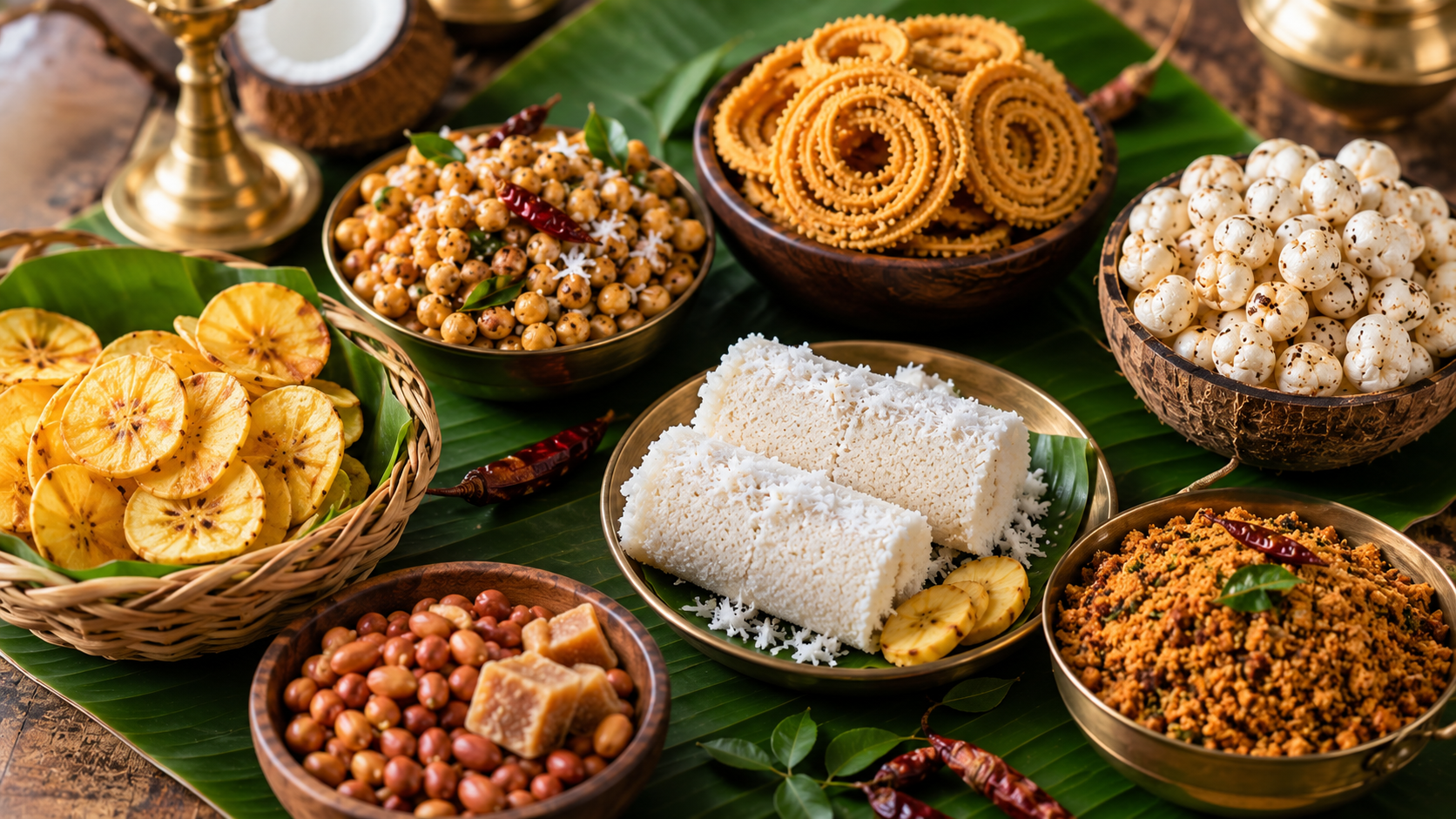
1. Kerala Nendran Banana Chips
Commercial banana chips give the whole category a bad reputation. Made from ordinary plantain varieties fried in refined palm oil with artificial flavouring, they are exactly as unhealthy as they taste.
Authentic Kerala banana chips made from the Nendran variety are genuinely different. Nendran is a thick-skinned, high-starch banana grown exclusively in Kerala that produces chips with a completely different nutritional profile from regular plantain chips. Fried in pure cold-pressed coconut oil with only salt added, the ingredient list contains just three items.
Coconut oil contains medium-chain fatty acids — specifically lauric acid — that the body metabolises differently from the long-chain fatty acids found in most cooking oils. Instead of being stored as fat, they are converted into energy. These chips are lower in trans fats than snacks fried in refined vegetable oil and contain no artificial preservatives or flavour enhancers.
A 30g serving provides real energy without the artificial ingredients that make commercial snacks problematic. When made fresh in small batches and shipped within days of frying — as authentic Kerala brands often do — there is no need for chemical preservatives.
2. Chammanthi Podi
Dry roasted coconut chutney powder from Kerala is one of the most nutritious condiments in South Indian cooking and one of the least appreciated outside the state.
The base consists of freshly grated coconut slow-roasted over low heat until deeply golden — a process that concentrates flavour and removes nearly all moisture. Dried red chillies, curry leaves, and tamarind are roasted alongside it. Once ground, the result is a completely dry powder with a long natural shelf life and an impressive nutritional profile.
Coconut provides healthy fats and medium-chain triglycerides. Curry leaves are among the most mineral-dense ingredients used in South Indian cooking, containing high levels of iron, calcium, and antioxidants. Readers interested in learning more about this ingredient can explore our guide on Curry Leaf Powder and Its Benefits. Dried chillies contain capsaicin, which has documented anti-inflammatory properties.
A tablespoon of chammanthi podi mixed with coconut oil and eaten with rice delivers healthy fats, trace minerals, and antioxidants in a form the body absorbs efficiently.
3. Murukku
The spiral rice flour snack found across South India is genuinely nutritious when prepared traditionally — a fact often overlooked because commercial murukku typically uses refined flour and palm oil.
Traditional murukku is made from rice flour and urad dal flour in roughly a 3:1 ratio, along with cumin, sesame seeds, and asafoetida for flavour. The urad dal provides a meaningful amount of protein — significantly more than most potato- or corn-based snacks. Rice flour is naturally gluten-free, while sesame seeds contribute calcium, iron, and healthy fats.
The oil used makes all the difference. Traditional murukku fried in coconut oil or peanut oil has a completely different nutritional profile from commercial versions fried in hydrogenated vegetable oils. Coconut oil’s high smoke point also reduces oxidation during frying, resulting in fewer harmful compounds in the final product.
4. Sundal
Perhaps the most nutritious South Indian snack category, sundal, remains relatively unknown internationally. It consists of boiled legumes — chickpeas, black-eyed peas, white peas, or green moong — tempered with mustard seeds, curry leaves, dried chillies, and fresh coconut.
High in protein and fibre, low in fat, and naturally gluten-free, sundal is the kind of snack nutritionists would design from scratch. The tempering process, carried out in a small amount of oil, releases flavour compounds from mustard seeds and curry leaves, making the dish far more flavourful than its simple ingredient list suggests.
Prepared in large quantities during Navratri festivals as prasad, sundal has one of the longest culinary traditions among South Indian snacks. Over generations, the recipe has evolved to balance flavour and nutrition exceptionally well.
5. Makhana (Lotus Seeds)
Although eaten across both South and North India, makhana has deep roots in traditional South Indian cooking as both a fasting food and an everyday snack. Dry roasted in a small amount of ghee with rock salt and occasionally seasoned with black pepper or chilli powder, makhana is one of the few genuinely low-calorie, high-protein snacks that require almost no preparation.
A 30g serving of roasted makhana contains approximately 5–6g of protein, around 100 calories, and very little fat. It is also rich in magnesium, potassium, and phosphorus. These minerals play important roles in supporting normal muscle, nerve, and bone function, as noted by the National Institutes of Health (NIH) Office of Dietary Supplements Since makhana comes from the lotus plant, it requires no agricultural land to cultivate, making it one of the more sustainable traditional snack ingredients.
6. Puttu
People across Kerala enjoy this steamed rice-and-coconut cylinder as a breakfast dish, snack, or light meal, depending on how they pair it. Made from coarsely ground rice flour layered with fresh coconut and steamed in a cylindrical vessel, puttu is oil-free, preservative-free, and genuinely filling.
The combination of rice flour and coconut creates a balance of carbohydrates and fats that helps sustain energy levels without causing sharp blood sugar spikes. Served with banana and coconut milk, it becomes a complete meal. Eaten alone, it remains light while still providing lasting energy.
7. Roasted Peanuts with Jaggery
The simplest South Indian snack may also be the most nutritious gram for gram. Peanuts are among the most protein-dense legumes available — a 30g serving provides 7–8g of protein along with healthy monounsaturated fats, vitamin E, magnesium, and folate.
Traditionally, people dry-roast raw peanuts in a heavy pan until they become fragrant and then eat them with a small piece of jaggery instead of refined sugar.
. This snack combination is common across Kerala, Tamil Nadu, and Andhra Pradesh.
Unlike refined sugar, jaggery retains iron and trace minerals. Combined with the protein and healthy fats in peanuts, it creates one of the most nutritionally balanced simple snacks on this list.
Where to Find Authentic South Indian Snacks Online
The health benefits of these traditional snacks depend entirely on how they are prepared. Commercial versions that replace coconut oil with refined oils, add artificial flavours, and rely on chemical preservatives for extended shelf life lose many of the nutritional advantages that make traditional preparation worthwhile.
For authentic homemade South Indian and Kerala snacks prepared with natural ingredients and zero preservatives, explore healthy South Indian snacks online