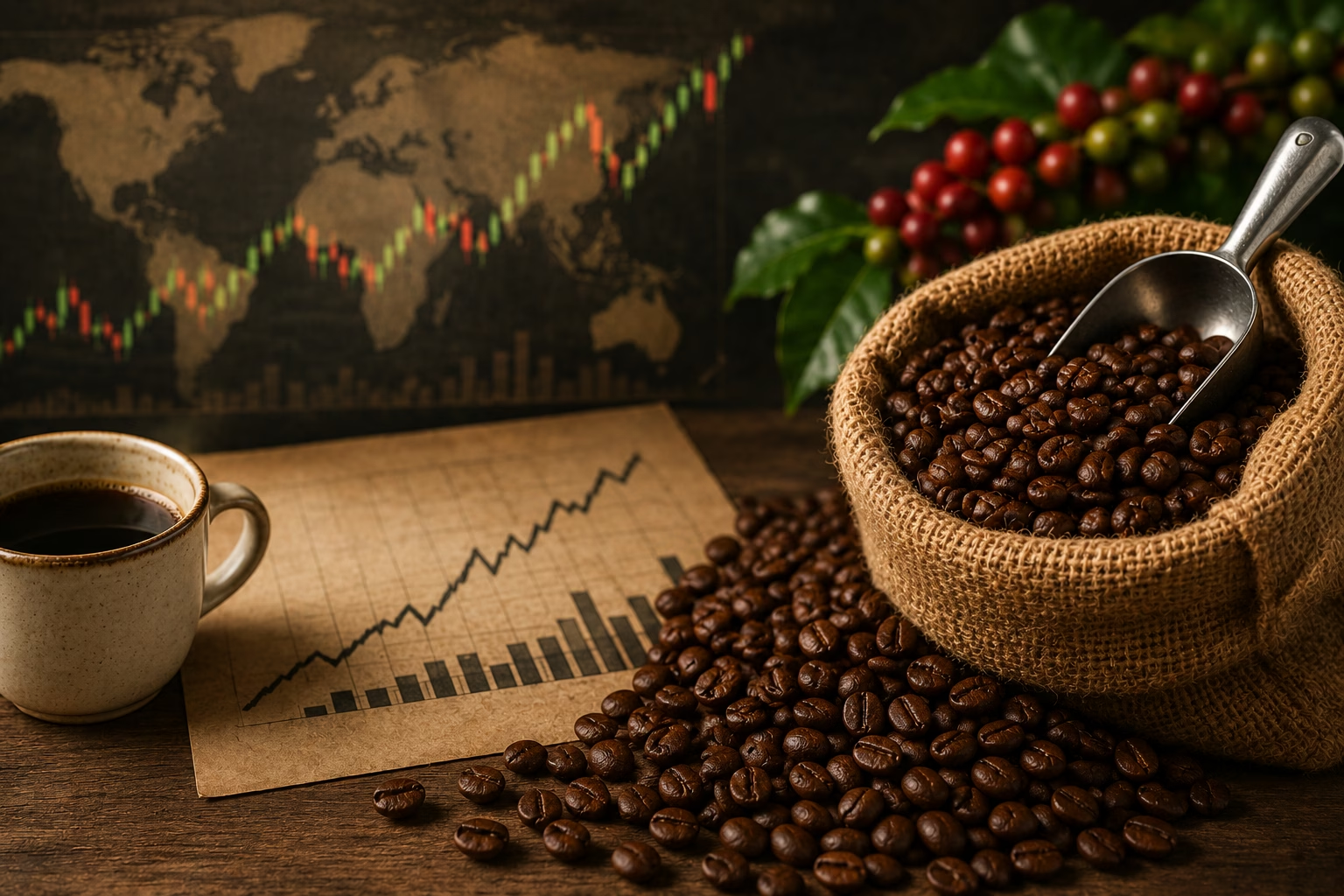
Coffee Price Trend in Q1 2026: Understanding the Market Landscape

Coffee remains one of the most traded agricultural commodities in the world, supporting millions of farmers and serving as a daily staple for consumers across continents. The global coffee market experienced notable price fluctuations during the first quarter of 2026, driven by weather conditions, production outlooks, export activities, and shifting demand patterns.
Understanding the Coffee Price Trend is increasingly important for traders, importers, roasters, food manufacturers, and industry stakeholders seeking to navigate a highly dynamic market environment.
According to recent market data for April 2026:
| Product | Region | Incoterm Basis | Price | Last Updated |
|---|---|---|---|---|
| Coffee | Colombia | CIF | USD 7,376/KG | April 2026 |
| Coffee | Brazil | CIF | USD 6,917/KG | April 2026 |
These prices highlight the premium associated with Colombian coffee while also reflecting the strong global demand for Brazilian coffee exports.
Global Coffee Market Overview
Coffee production is concentrated primarily in tropical regions, with Brazil and Colombia ranking among the world’s leading producers. The market is highly sensitive to environmental conditions, labor availability, transportation costs, and international trade policies.
In recent years, coffee prices have experienced heightened volatility due to:
- Climate-related disruptions
- Rising production costs
- Supply chain bottlenecks
- Currency fluctuations
- Growing demand for specialty coffee
These factors continued to influence the Coffee Price Trend throughout Q1 2026.
Key Factors Influencing Coffee Prices in Q1 2026
1. Weather Conditions in Major Producing Regions
Coffee cultivation depends heavily on stable climatic conditions. Brazil and Colombia experienced varying weather patterns during the growing season, creating uncertainty regarding crop yields.
Producers closely monitored:
- Rainfall distribution
- Temperature fluctuations
- Frost risks
- Drought conditions
Even minor weather disruptions can significantly impact global coffee supply, leading to immediate price reactions in international markets.
Industry reports published by the International Coffee Organization (ICO) highlight the growing impact of climate conditions on global coffee supply and trade
2. Increasing Production Costs
Coffee farmers continue to face rising operational expenses, including:
- Fertilizers
- Agricultural chemicals
- Labor wages
- Fuel and transportation costs
Higher production costs often translate into elevated export prices, contributing to upward pressure on the Coffee Price Trend.
3. Strong Global Consumption
Coffee consumption remains resilient despite economic uncertainties. Demand growth has been supported by:
- Expansion of specialty coffee shops
- Rising coffee culture in Asia
- Growth in ready-to-drink coffee products
- Increasing home brewing trends
This sustained demand has helped maintain strong pricing levels across major exporting nations.
4. Logistics and Shipping Challenges
International coffee trade relies heavily on efficient transportation networks. Shipping delays and elevated freight rates in certain regions affected market sentiment during Q1 2026.
Key concerns included:
- Port congestion
- Container shortages
- Increased freight charges
- Delivery delays
Such logistical challenges can tighten short-term supply and influence regional pricing patterns.
Colombia’s Coffee Market Performance
Colombia is globally recognized for producing high-quality Arabica coffee with distinctive flavor characteristics. The country’s coffee sector benefits from favorable growing conditions and strong international demand.
The reported CIF price of USD 7,376/KG in April 2026 reflects:
- Premium quality positioning
- Strong export demand
- Controlled production volumes
- Growth in higher-value specialty coffee segments
Colombian coffee continues to command premium prices due to its reputation for consistency, aroma, and flavor profile.
Brazil’s Coffee Market Performance
Brazil remains the world’s largest coffee producer and exporter, accounting for a substantial share of global coffee supply.
The CIF price of USD 6,917/KG in April 2026 highlights the country’s competitive position in the international market.
Factors supporting Brazilian coffee prices include:
- Large-scale production capabilities
- Strong export infrastructure
- Robust international demand
- Market confidence in supply availability
Brazil’s influence on the Coffee Price Trend is particularly significant because production changes in the country often affect global market sentiment.
Emerging Trends Shaping the Coffee Industry
Sustainability and Responsible Sourcing
Consumers increasingly prefer sustainably sourced coffee. This shift is encouraging producers and exporters to adopt:
- Environmentally responsible farming practices
- Water conservation measures
- Reduced chemical usage
- Fair trade initiatives
Sustainability certifications are becoming an important factor in purchasing decisions across global markets.
Growth of Specialty Coffee
Specialty coffee continues to gain popularity among consumers seeking premium-quality beverages and unique flavor experiences.
This trend supports higher prices and creates opportunities for producers to differentiate their products based on origin, processing methods, and quality standards.
Digital Transformation in Coffee Trading
Technology is improving transparency and efficiency across the coffee supply chain through:
- Digital trading platforms
- Supply chain tracking systems
- Data-driven market analysis
- Blockchain-based traceability solutions
These innovations are helping stakeholders make more informed procurement decisions. To better understand coffee quality, sourcing, and processing methods, readers can also explore our article on coffee production and brewing techniques.”
Coffee and Nutrition: Why Demand Remains Strong
Coffee is appreciated not only for its flavor but also for its nutritional and functional properties. Research suggests that coffee contains naturally occurring antioxidants and bioactive compounds that may contribute to overall wellness when consumed as part of a balanced diet.
For evidence-based information on coffee and nutrition, readers can refer to the Harvard T.H. Chan School of Public Health’s Nutrition Source resource: https://nutritionsource.hsph.harvard.edu/food-features/coffee/
As awareness of coffee’s nutritional profile grows, consumer interest continues to support market demand globally.
Future Outlook for the Coffee Price Trend
Looking ahead, several factors are expected to shape coffee prices throughout 2026.
Potential Price Support Factors
- Weather-related production risks
- Rising input costs
- Expanding specialty coffee demand
- Sustainability-driven premiums
Potential Price Moderation Factors
- Improved harvest yields
- Better logistics performance
- Increased export availability
- Stable global economic conditions
Market participants should continue monitoring production forecasts from major producing countries, as supply developments remain one of the most influential drivers of price movements.
Conclusion
The Coffee Price Trend in Q1 2026 reflects a market balancing strong global demand with ongoing supply-side uncertainties. Colombia maintained premium pricing at USD 7,376/KG CIF, while Brazil recorded USD 6,917/KG CIF, underscoring the importance of both countries in the global coffee trade.
Weather conditions, production costs, sustainability initiatives, and evolving consumer preferences will continue to influence coffee pricing throughout the year. For traders, manufacturers, and procurement professionals, staying informed about these market dynamics remains essential for effective decision-making and risk management.
Frequently Asked Questions (FAQs)
1. What is driving the Coffee Price Trend in 2026?
The primary drivers include weather conditions, production costs, global demand, logistics challenges, and sustainability initiatives across major coffee-producing regions.
2. Why is Colombian coffee priced higher than Brazilian coffee?
Colombian coffee often commands a premium due to its reputation for high-quality Arabica beans, distinctive flavor profile, and strong demand in specialty coffee markets.
3. How does the weather affect coffee prices?
Coffee production is highly sensitive to climate conditions. Droughts, excessive rainfall, frost, and temperature fluctuations can reduce yields and impact market prices.
4. What role does sustainability play in coffee pricing?
Sustainably produced coffee often attracts premium pricing because consumers and businesses increasingly value environmentally and socially responsible sourcing practices.
5. Will coffee prices remain elevated throughout 2026?
Future price movements will depend on harvest outcomes, global demand, logistics efficiency, and weather conditions in key producing regions such as Brazil and Colombia.
Author Bio
Kunil Kumar is an SEO Executive at Procurement Resource, specializing in digital visibility and content focused on commodity markets, procurement intelligence, and industrial insights. He creates data-driven content that helps businesses stay informed about market trends and industry developments.