An In-Depth Analysis of the Spice Market and Its Evolution
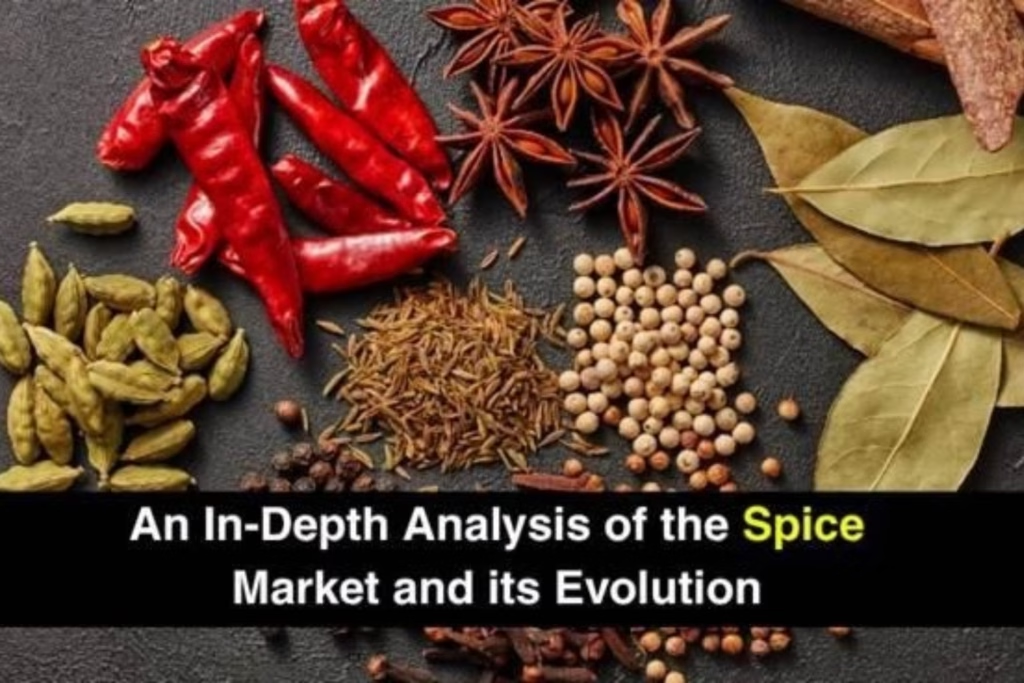
Food Trends Worldwide is Changing Quickly, and One of the most noteworthy Changes is how Mercado de Especias (the World Spices Market) has changed from a former, traditional, and stable Market, to a New, fast-growing, and dynamic Industry Driven by changes in Consumer Preference, Food Processing Innovation, and the Globalization of Culinary Culture.
Mercado Global de Especias is also MOre than just a Seasoning Product and has now become the primary contributor to creating food experiences in Households, Restaurants, and Large-Scale Food Producers. Furthermore, Consumers have gone beyond just looking for Flavor; they’re now looking for Authenticity, Health Benefits AND Convenience!
Market Dynamics and Growth Drivers
The growing Mercado Global de Especias (Global Spice Market) is strongly linked to the current trend toward using natural food and health-focused products. There is a noticeable decline in consumer usage of chemical preservatives and artificial flavor enhancers; many of these same consumers are now using only natural herbs and spices because they not only add flavor, but also have health-promoting abilities. Some examples of herbs and spices that are becoming popular for their healthy properties are turmeric, ginger, and cinnamon.
Another major factor contributing to market expansion is the rapid growth of the processed food industry. As modern lifestyles become more fast-paced, the demand for ready-to-eat and easy-to-cook meals continues to rise. In this context, the Mercado Global de Especias y Condimentos becomes essential, as these products help maintain consistent taste and quality across large-scale production.
Globalization has significantly driven market growth by exposing people to diverse cuisines. As consumers explore new flavours, they increase demand for a wider variety of spices. Producers now distribute spices that were once region-specific across global markets, turning them into widely accessible products. This cultural exchange has transformed spices from regional ingredients into global commodities.
Market Segmentation and Its Impact
Merchandise sold in the marketplace consists of pure spices, herbs, combined spice mixtures, and condiments. Each category of these items performs a unique function; however, pure spices are the basis of the entire marketplace due to their core authenticity and versatility (see above). Blends of spices are becoming increasingly popular for consumers because they often offer a more straightforward way to prepare meals. The increasing importance of condiments within the diet of modern society provides an effortless way to add flavour to foods or beverages without sacrificing taste.
You can analyze the market based on the form in which spices are available. Consumers often prefer whole spices because they offer a longer shelf life and stronger aroma, while they use ground spices more frequently due to their convenience. In recent years, manufacturers and consumers have increasingly adopted paste and liquid forms, especially in the processed food sector, where ease of application plays a crucial role.
How the Mercado de especias continues to develop can be seen through distribution channels. Supermarkets and other traditional retail formats continue to be viable sources of spice, but the explosive expansion of e-commerce has created an additional source of access to consumers, who now are able to search for and purchase a greater number of products and brands than ever before. This increase in search capability allows for an increased level of competition and innovation within the mercado de especias.
Spices and condiments serve many purposes beyond home cooking. Food service businesses, including restaurants and catering services, rely on them to enhance flavour and consistency, while food manufacturers use them in large-scale production. Additionally, the pharmaceutical and cosmetic industries increasingly incorporate spices and condiments because of their natural and functional properties.
Emerging Trends Shaping the Market
The Mercado Global de Especias is being shaped by several emerging trends that reflect broader changes in consumer behavior. One of the most prominent trends is the growing demand for organic and clean-label products. Consumers are increasingly interested in transparency and quality, which has led to a rise in organically sourced and minimally processed spices.
Another major trend emerged – the world’s growing popularity and fusion cuisines. The average consumer has begun discovering used pieces of different cultures through food, resulting in a rising demand for spices from those cultures. Social networks and the internet have made it easier for people to find and cook international recipes. They provide a constant stream of inspiration for anyone looking to try new ideas.
Another significant factor in shaping the Mercado Global de Especias y Condimentos is convenience. Many urban consumers are looking for faster and easier ways to cook. As a result, ready-to-use and pre-seasoned spice mixes and other seasoning options are gaining ground. At the same time, consumers are showing a growing willingness to pay for high-quality, sustainably sourced spices, which is driving demand for premium products.
Challenges and Market Constraints
Despite its strong growth, the Mercado Global de Especias faces several challenges that could impact its long-term development. Fluctuations in climate conditions, agricultural productivity, and geopolitical issues drive the volatility of raw material prices, making it a primary concern.
The disruptions in supply chains create a challenge as there is a strong reliance on exporting globally. To maintain product consistency and availability, logistics/transportation and supplier networks must be effective.
Another major issue in the Mercado Global De Especias Y Condimentos is with Quality Control. There are more restrictive regulations throughout many regions due to the risk of adulteration/quality contamination; therefore, companies need to put into place better processes for quality assurance.
Future Outlook and Opportunities
The Mercado de Especias is expected to have a very bright future in general. The market’s trajectory is on the rise and will continue to climb due to continuing innovation and changing consumer preferences. Additionally, many different types of new markets will provide tremendous growth opportunities through urbanisation and increasing disposable incomes of their inhabitants.
Functional spices will attract more attention and grow significantly in popularity over the coming years. Sustainable and ethically sourced products will also drive future growth.
Technological advancements in processing, packaging, and supply chain management will further enhance efficiency and product quality, enabling companies to meet the growing expectations of consumers.
Conclusion
To summarize, the activity of creating and distributing spice products through Global Markets for Spices has transitioned into a multifaceted and internationalised industry that extends beyond its traditional activities. This change has occurred through the influence of globalization, health trends, and new ideas – an evolutionary process that has contributed significantly to the continued growth and development of the spice product segment within the larger global food marketplace.
The Mercado de Especias y Condimentos continues to expand as consumers seek better, healthier, and more convenient food solutions. For businesses and stakeholders, this market presents a wide range of opportunities, provided they are able to adapt to changing demands and maintain high standards of quality and authenticity.